COVINGTON, La. -- BP PLC says it will spend up to $500 million to research the effects of the growing Gulf of Mexico oil spill on the marine and shoreline environment.
The company, which leased the rig and is responsible for the cleanup, said Monday that the 10-year research program will study the effects of the oil. It also will study chemical dispersants used to break up oil on the seabed and along the shore.
The program also aims to study the impact of the dispersant on the oil and ways to improve technology to detect oil and clean up the ooze.
BP chief executive Tony Hayward says the research into the monthlong spill "will be a key part of the process of restoration, and for improving the industry response capability for the future."
Sun Herald
Showing posts with label Water Quality. Show all posts
Showing posts with label Water Quality. Show all posts
Monday, May 24, 2010


Monday, May 17, 2010
Ocean Springs and Biloxi are being proactive to protect the waterways
I'm thrilled to see Mayors Moran and Holloway pushing to protect these waters. I've not paddled all the waters down there, yet. But plenty enough to know that if this spill gets into the back bays and marshes the environmental damage will result in decades of problems.
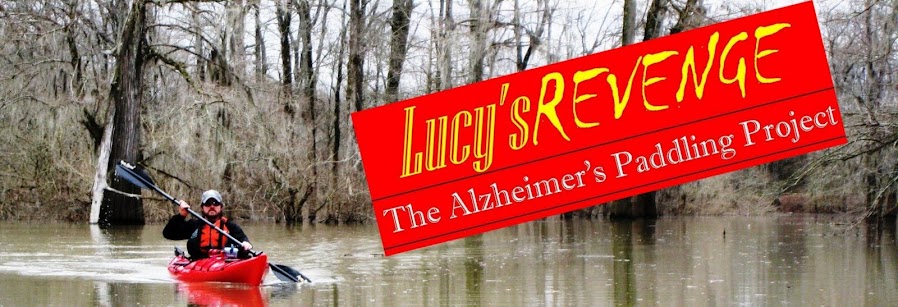
Lucy's Revenge kicks off in Ocean Springs on Old Fort Bayou on July 10. So, I am watching this close. It is very comforting to know we have such great leaders down there.
Lucy's Revenge kicks off in Ocean Springs on Old Fort Bayou on July 10. So, I am watching this close. It is very comforting to know we have such great leaders down there.
Two cities plan for worstRead more: The Sun Herald
OCEAN SPRINGS — Mayor Connie Moran said she isn’t waiting for a knight in shining armor to Ocean Spring’s rescue as the city did after Hurricane Katrina and Monday city will submit a $3 million action plan to protect the marshes from oil that might come ashore from the Deepwater Horizon spill.
Ocean Springs joins Biloxi, which on Friday asked the Mississippi Department of Marine Resources for $2.99 million to pay for police, firefighters, engineering and other personnel to take care of everything from traffic control to hazard response. The funding is for 8 months and could change depending on what type of cleanup ultimately is needed, the administration said.
Tar balls continued to be found on the beaches of South Mississippi over the weekend. The Mississippi Department of Environmental Quality had recovered 60 tar balls from Harrison and Hancock counties and none from Jackson County. There was no oil sheen in Mississippi waters and no fish kills reported.
On Sunday, Hancock County emergency operations center director Brian Adam reported six or seven hard tar balls were found on the beach between the Bay St. Louis Bridge and the St. Stanislaus Pier.
Harrison County Emergency Management Director Rupert Lacy said tar balls continue to be found on Harrison County beaches and are being analyzed to determine which well they came from.
He said residents can expect to continue to find a few tar balls on the beach.
Moran said Ocean Springs hasn’t had any signs of oil on its shores but she is not going to leave the details to BP, which is focused on stopping the leak.
The city will use the $3 million to hire its own environmental engineers and protect the many marshes with a more substantial barrier than the “flimsy” boom Moran said now in place.
Thursday, May 13, 2010
Sun Herald: Coast holds its breath
BILOXI — Gov. Haley Barbour on Wednesday said Mississippi has been lucky, but the state can’t count on its good fortune to last, particularly if south winds continue to blow on the Gulf of Mexico oil spill.
Barbour called for more people to join the 9,000 who have volunteered to help so far in the event the area has to be cleaned up from the massive spill.
“We have prayed for the best, but prepared for the worst,” Barbour said. “So far, our prayers have been answered, but we are not assuming that we’re not going to have more movement in our direction, particularly with the wind being out of the south right now. If it stays that way for several days, we could have an incursion onto our area.”
If the oil breaches Mississippi’s protections, Barbour said much help will be needed. He urged residents to sign up for the required hazmat training now. He said four hours of training are needed for those who just want to help, but anyone interested in supervising the cleanup will have to take 40 hours of hazmat training. If the oil arrives, those volunteers would need to be deployed quickly.
Barbour would like to see more boats signed up to work alongside the 315 vessels enrolled to help with the cleanup.
Barbour also echoed local officials, saying the Mississippi Coast is still open for business, despite perceptions the widely covered oil spill has created.
He said some media reports are comparing it with the 1989 Exxon Valdez spill; this has led to canceled vacations and charter boat trips, hurting the economy.
“Let me just tell you a fact — our waters, our barrier islands, our beaches, our golf courses are just like they were a month ago,” Barbour said. “They are just like they were before this oil well blew out. The oil well is 108 miles south of Gulfport and there hasn’t been any oil anywhere near where the tourists would go.”
Read more: The Sun Herald
Barbour called for more people to join the 9,000 who have volunteered to help so far in the event the area has to be cleaned up from the massive spill.
“We have prayed for the best, but prepared for the worst,” Barbour said. “So far, our prayers have been answered, but we are not assuming that we’re not going to have more movement in our direction, particularly with the wind being out of the south right now. If it stays that way for several days, we could have an incursion onto our area.”
If the oil breaches Mississippi’s protections, Barbour said much help will be needed. He urged residents to sign up for the required hazmat training now. He said four hours of training are needed for those who just want to help, but anyone interested in supervising the cleanup will have to take 40 hours of hazmat training. If the oil arrives, those volunteers would need to be deployed quickly.
Barbour would like to see more boats signed up to work alongside the 315 vessels enrolled to help with the cleanup.
Barbour also echoed local officials, saying the Mississippi Coast is still open for business, despite perceptions the widely covered oil spill has created.
He said some media reports are comparing it with the 1989 Exxon Valdez spill; this has led to canceled vacations and charter boat trips, hurting the economy.
“Let me just tell you a fact — our waters, our barrier islands, our beaches, our golf courses are just like they were a month ago,” Barbour said. “They are just like they were before this oil well blew out. The oil well is 108 miles south of Gulfport and there hasn’t been any oil anywhere near where the tourists would go.”
Read more: The Sun Herald
Wednesday, May 12, 2010
County to apply for oil-spill grant funds
Mississippi Business Journal
JACKSON COUNTY — Jackson County supervisors say they will apply for a share of the $25-million grant given to the state by BP PLC.
BP gave Mississippi, Alabama, Louisiana and Florida $25 million each to help pay for cleanup and mitigation efforts for the Gulf Coast oil spill.
Supervisors said yesterday that the Mississippi Department of Environmental Quality and Department of Marine Resources will administer the grants. The agencies have asked coastal counties and municipalities to apply for the funds by presenting a list of needed materials.
Board president Mike Mangum told The Mississippi Press that local governments that receive approval can purchase materials such as booms and boats and later be reimbursed.
JACKSON COUNTY — Jackson County supervisors say they will apply for a share of the $25-million grant given to the state by BP PLC.
BP gave Mississippi, Alabama, Louisiana and Florida $25 million each to help pay for cleanup and mitigation efforts for the Gulf Coast oil spill.
Supervisors said yesterday that the Mississippi Department of Environmental Quality and Department of Marine Resources will administer the grants. The agencies have asked coastal counties and municipalities to apply for the funds by presenting a list of needed materials.
Board president Mike Mangum told The Mississippi Press that local governments that receive approval can purchase materials such as booms and boats and later be reimbursed.
Tuesday, May 11, 2010
Dead dolphins wash up on coast; oil's role unclear
Associated Press
SHIP ISLAND, Miss. — Federal wildlife officials are treating the deaths of six dolphins on the Gulf Coast as oil-related even though other factors may be to blame.
Blair Mase (MACE') of the National Marine Fisheries Service said Tuesday that the carcasses have all been found in Louisiana, Mississippi and Alabama since May 2. Samples have been sent for testing to see whether a massive oil spill in the Gulf of Mexico helped kill the dolphins.
Mase and animal rescue coordinator Michele Kelley in Louisiana said none of the carcasses has obvious signs of oil. Mase also said it's common for dead dolphins to wash up this time of year when they are in shallow waters to calve.
The Associated Press found dolphins swimming and playing in oily waters off Louisiana last week.
Cross Posted at The Flora Harvester
SHIP ISLAND, Miss. — Federal wildlife officials are treating the deaths of six dolphins on the Gulf Coast as oil-related even though other factors may be to blame.
Blair Mase (MACE') of the National Marine Fisheries Service said Tuesday that the carcasses have all been found in Louisiana, Mississippi and Alabama since May 2. Samples have been sent for testing to see whether a massive oil spill in the Gulf of Mexico helped kill the dolphins.
Mase and animal rescue coordinator Michele Kelley in Louisiana said none of the carcasses has obvious signs of oil. Mase also said it's common for dead dolphins to wash up this time of year when they are in shallow waters to calve.
The Associated Press found dolphins swimming and playing in oily waters off Louisiana last week.
Cross Posted at The Flora Harvester
Monday, May 10, 2010

Saturday, May 8, 2010
BP officials say containment dome is running into problems.

Saturday May 8, 2010--BP officials provided an update on current efforts to stop the flow of oil into the Gulf of Mexico today. According to the company announcement, the attempts to place the containment dome have so far been unsuccessful.
“As we had expressed numerous times, this particular operation has never been done before at this depth and a significant technical challenge was with hydrate formation,” read the company statement.
The statement described hydrate formation as a chemical process when gas combines with water under certain pressure and temperatures that form as crystals, similar to ice.
The dome was lowered to the sea floor yesterday evening. However, as workers began to place it over the source of the leak, a large volume of hydrates formed inside the top of the dome, requiring it to be moved to the side of the leak point. The dome is currently sitting on the sea bed while technicians evaluate options to deal with the hydrate issue.
The company is also simultaneously investigating other techniques to control the source of flow and ultimately stop the source of flow. These include activities utilizing the existing blowout preventer to stop the flow. Additional data will be gathered to see if these options are viable and that work will continue over the next 48 hours. The relief well drilling continues and is at approximately 9,000 feet below the surface of the water and making progress ahead of plan.
BP officials say the company has also deployed over 130,000 feet of boom on Friday alone; approaching a million feet deployed with over 2.3 million additional feet, either coming from existing stocks in the US and other countries to fight the spread of oil already spreading from the leak site.
“We have oil around Chandelier Island, LA and our cleanup teams are responding,” read the statement.
There were five successful offshore burns Friday, and skimming operations skimmed over 17,500 barrels of an oily water mix.
Thursday, May 6, 2010
Oil spill volunteer training, clean-up planned
Volunteers who want to help clean up Mississippi’s beaches before oil makes landfall can receive free training on the Gulf Coast this week.
Officials say the efforts will minimize the oil’s impact.
Community training for beach cleanup will be held at 2 p.m., 4 p.m. and 6 p.m., Tuesday through Saturday at Mississippi Gulf Coast Community College’s Jackson County campus gymnasium and the Jefferson Davis campus in room U202.
Training also will be held at 2 p.m., 4 p.m. and 6 p.m., Tuesday through Friday at Pearl River Community College’s Hancock County Center.
This response training is hosted by local elected officials, BP personnel, community organizations and MGCCC, according to a news release from the Mississippi Emergency Management Agency.
MEMA, the Mississippi Department of Environmental Quality and the Department of Marine Resources have been meeting with British Petroleum to coordinate the training efforts.
The training sessions will qualify volunteers to participate in pre-landfall beach cleaning. Federal, state and private entities are asking any volunteers to attend training to ensure their personal safety and well-being.
After training, volunteers will be at the following locations for beach clean-up:
Hancock County
• 2 p.m. at Bay St. Louis.
• 4 p.m. at Waveland.
• 6 p.m. at Buccaneer State Park.
Harrison County
• 2 p.m.: Pass Christian Central, Pass Christian East, Long Beach and Biloxi Central.
• 4 p.m.: Gulfport West, Gulfport Harbor, Gulfport West Central and Biloxi East.
• 6 p.m.: Courthouse Rd., Gulfport East and Edgewater
Jackson County
* 2 p.m.: Front Beach and Shearwater.
* 4 p.m.: Gulf Park Estates and St. Andrews.
• 6 p.m.: Pascagoula Beach West and Pascagoula Beach East.
Officials say the efforts will minimize the oil’s impact.
Community training for beach cleanup will be held at 2 p.m., 4 p.m. and 6 p.m., Tuesday through Saturday at Mississippi Gulf Coast Community College’s Jackson County campus gymnasium and the Jefferson Davis campus in room U202.
Training also will be held at 2 p.m., 4 p.m. and 6 p.m., Tuesday through Friday at Pearl River Community College’s Hancock County Center.
This response training is hosted by local elected officials, BP personnel, community organizations and MGCCC, according to a news release from the Mississippi Emergency Management Agency.
MEMA, the Mississippi Department of Environmental Quality and the Department of Marine Resources have been meeting with British Petroleum to coordinate the training efforts.
The training sessions will qualify volunteers to participate in pre-landfall beach cleaning. Federal, state and private entities are asking any volunteers to attend training to ensure their personal safety and well-being.
After training, volunteers will be at the following locations for beach clean-up:
Hancock County
• 2 p.m. at Bay St. Louis.
• 4 p.m. at Waveland.
• 6 p.m. at Buccaneer State Park.
Harrison County
• 2 p.m.: Pass Christian Central, Pass Christian East, Long Beach and Biloxi Central.
• 4 p.m.: Gulfport West, Gulfport Harbor, Gulfport West Central and Biloxi East.
• 6 p.m.: Courthouse Rd., Gulfport East and Edgewater
Jackson County
* 2 p.m.: Front Beach and Shearwater.
* 4 p.m.: Gulf Park Estates and St. Andrews.
• 6 p.m.: Pascagoula Beach West and Pascagoula Beach East.
APNewsBreak: Boat with containment box at oil site
Sun Herald
ON THE GULF OF MEXICO -- With success uncertain, a boat carrying a 100-ton concrete-and-steel contraption designed to siphon off the oil fouling the Gulf of Mexico arrived at the scene Thursday in an unprecedented attempt to cap a blown-out well spewing hundreds of thousands of gallons a day.
Another boat with a crane would start lowering the box to the seafloor later in the day. Engineers hope it will be the best short-term solution to controlling the leak that has only worsened since it began two weeks ago.
The waters at the spill site Thursday morning were calm with some clouds in the sky, though visibility was good. Roughly a dozen other ships either surrounded the spill site or could be seen in the distance.
Thick, tar-like oil surrounded the boat for as far as the eye could see. The pungent scent of oil could be smelled even in the bridge of the boat.
The Joe Griffin was expected to meet up with another BP-chartered boat, the Boa Sub C, a Norwegian vessel that will use a crane to lower the contraption to cover the gusher of oil spewing from the seabed - something that has never been tried before at such depths. BP spokesman Bill Salvin said the drop is expected at about noon Thursday.
"We're even more anxious," the Joe Griffin's first mate, Douglas Peake, said. "Hopefully, it will work better than they expect."
A rapid response team planned to head to the Chandeleur Islands off Louisiana's coast Thursday to look into unconfirmed reports that oil from the spill had arrived there, Coast Guard Petty Officer Erik Swanson said.
The boat hauling the specially built containment box and dome structure pushed off Wednesday evening from the Louisiana coast. The dome-like top of the structure is designed to act like a funnel and siphon the oil up through 5,000 feet of pipe and onto a tanker at the surface. Oil has been gushing into the Gulf of Mexico at a rate of at least 200,000 gallons a day since an offshore drilling rig exploded and sank last month, killing 11 people.
"We're a little anxious. They're gonna try everything they can. If it don't work, they'll try something else," Capt. Demi Shaffer told The Associated Press aboard his boat just after it set off. The AP is the only news organization with access to the containment effort.
A 12-man crew aboard a supply boat was carrying the precious cargo. The 280-foot Joe Griffin, owned by Edison Chouest Offshore, also was involved in helping fight the fire that resulted from the oil rig explosion. The vessel is named for a boat captain who worked with company founder Edison Chouest, when Chouest was still in the shrimping business.
ON THE GULF OF MEXICO -- With success uncertain, a boat carrying a 100-ton concrete-and-steel contraption designed to siphon off the oil fouling the Gulf of Mexico arrived at the scene Thursday in an unprecedented attempt to cap a blown-out well spewing hundreds of thousands of gallons a day.
Another boat with a crane would start lowering the box to the seafloor later in the day. Engineers hope it will be the best short-term solution to controlling the leak that has only worsened since it began two weeks ago.
The waters at the spill site Thursday morning were calm with some clouds in the sky, though visibility was good. Roughly a dozen other ships either surrounded the spill site or could be seen in the distance.
Thick, tar-like oil surrounded the boat for as far as the eye could see. The pungent scent of oil could be smelled even in the bridge of the boat.
The Joe Griffin was expected to meet up with another BP-chartered boat, the Boa Sub C, a Norwegian vessel that will use a crane to lower the contraption to cover the gusher of oil spewing from the seabed - something that has never been tried before at such depths. BP spokesman Bill Salvin said the drop is expected at about noon Thursday.
"We're even more anxious," the Joe Griffin's first mate, Douglas Peake, said. "Hopefully, it will work better than they expect."
A rapid response team planned to head to the Chandeleur Islands off Louisiana's coast Thursday to look into unconfirmed reports that oil from the spill had arrived there, Coast Guard Petty Officer Erik Swanson said.
The boat hauling the specially built containment box and dome structure pushed off Wednesday evening from the Louisiana coast. The dome-like top of the structure is designed to act like a funnel and siphon the oil up through 5,000 feet of pipe and onto a tanker at the surface. Oil has been gushing into the Gulf of Mexico at a rate of at least 200,000 gallons a day since an offshore drilling rig exploded and sank last month, killing 11 people.
"We're a little anxious. They're gonna try everything they can. If it don't work, they'll try something else," Capt. Demi Shaffer told The Associated Press aboard his boat just after it set off. The AP is the only news organization with access to the containment effort.
A 12-man crew aboard a supply boat was carrying the precious cargo. The 280-foot Joe Griffin, owned by Edison Chouest Offshore, also was involved in helping fight the fire that resulted from the oil rig explosion. The vessel is named for a boat captain who worked with company founder Edison Chouest, when Chouest was still in the shrimping business.
Wednesday, May 5, 2010
Top administration officials visiting Biloxi and Pascagoula this week
At the direction of President Obama, Department of Homeland Security (DHS) Secretary Janet Napolitano, Department of Commerce Secretary Gary Locke, NOAA Administrator Jane Lubchenco and EPA Deputy Administrator Bob Perciasepe will travel to the Gulf Coast this week to meet with federal, state and local officials, as well as local business leaders, as part of their continued oversight of BP’s efforts to plug the leak and contain the spill, and their ongoing emphasis on interagency coordination in response to the event.
On Thursday, Secretary Napolitano, Secretary Locke and Administrator Lubchenco will travel to Biloxi, Miss., to inspect response operations, meet with state, local and private sector leaders, and view firsthand staging areas for the deployment of boom to protect vital shoreline from the oil spill. Secretary Napolitano and Secretary Locke will then visit similar operations ongoing in Pensacola, Fla. Administrator Lubchenco and White House Council on Environmental Quality Chair Nancy Sutley will then visit Pascagoula, Miss., to visit NOAA’s seafood inspection lab.
EPA Deputy Administrator Perciasepe will also travel on Thursday to Louisiana, where he will review EPA’s ongoing air and water monitoring activities, meet with local and community leaders, and assess the environmental situation on the ground.
On Friday, Administrator Lubchenco and Chair Sutley will travel to Venice and St. Bernard Parish, La., to inspect shoreline cleanup assessment activities and meet with state, local and private sector leaders about the administration’s ongoing efforts to mitigate the spill’s impact on public health, the environment, and the economy.
Today, Department of the Interior Secretary Ken Salazar will tour Delta National Wildlife Refuge in Louisiana, Bon Secour National Wildlife Refuge in Alabama, and the areas affected by the BP oil spill to assess the ongoing Federal response efforts.
More details of these trips will be released when they are finalized.
On Thursday, Secretary Napolitano, Secretary Locke and Administrator Lubchenco will travel to Biloxi, Miss., to inspect response operations, meet with state, local and private sector leaders, and view firsthand staging areas for the deployment of boom to protect vital shoreline from the oil spill. Secretary Napolitano and Secretary Locke will then visit similar operations ongoing in Pensacola, Fla. Administrator Lubchenco and White House Council on Environmental Quality Chair Nancy Sutley will then visit Pascagoula, Miss., to visit NOAA’s seafood inspection lab.
EPA Deputy Administrator Perciasepe will also travel on Thursday to Louisiana, where he will review EPA’s ongoing air and water monitoring activities, meet with local and community leaders, and assess the environmental situation on the ground.
On Friday, Administrator Lubchenco and Chair Sutley will travel to Venice and St. Bernard Parish, La., to inspect shoreline cleanup assessment activities and meet with state, local and private sector leaders about the administration’s ongoing efforts to mitigate the spill’s impact on public health, the environment, and the economy.
Today, Department of the Interior Secretary Ken Salazar will tour Delta National Wildlife Refuge in Louisiana, Bon Secour National Wildlife Refuge in Alabama, and the areas affected by the BP oil spill to assess the ongoing Federal response efforts.
More details of these trips will be released when they are finalized.
Thursday, April 29, 2010
Things seem to be getting worse with the Oil Spill, Things worse than expected.
Gulf Coast oil spill could eclipse Exxon Valdez
 VENICE, La. – An oil spill that threatened to eclipse even the Exxon Valdez disaster spread out of control with a faint sheen washing ashore along the Gulf Coast Thursday night as fishermen rushed to scoop up shrimp and crews spread floating barriers around marshes.
The spill was bigger than imagined — five times more than first estimated — and closer. Faint fingers of oily sheen were reaching the Mississippi River delta, lapping the Louisiana shoreline in long, thin lines.
"It is of grave concern," David Kennedy of the National Oceanic and Atmospheric Administration, told The Associated Press. "I am frightened. This is a very, very big thing. And the efforts that are going to be required to do anything about it, especially if it continues on, are just mind-boggling."
The oil slick could become the nation's worst environmental disaster in decades, threatening hundreds of species of fish, birds and other wildlife along the Gulf Coast, one of the world's richest seafood grounds, teeming with shrimp, oysters and other marine life. Thicker oil was in waters south and east of the Mississippi delta about five miles offshore.
The leak from the ocean floor proved to be far bigger than initially reported, contributing to a growing sense among many in Louisiana that the government failed them again, just as it did during Hurricane Katrina. President Barack Obama dispatched Cabinet officials to deal with the crisis.
Associated Press

The spill was bigger than imagined — five times more than first estimated — and closer. Faint fingers of oily sheen were reaching the Mississippi River delta, lapping the Louisiana shoreline in long, thin lines.
"It is of grave concern," David Kennedy of the National Oceanic and Atmospheric Administration, told The Associated Press. "I am frightened. This is a very, very big thing. And the efforts that are going to be required to do anything about it, especially if it continues on, are just mind-boggling."
The oil slick could become the nation's worst environmental disaster in decades, threatening hundreds of species of fish, birds and other wildlife along the Gulf Coast, one of the world's richest seafood grounds, teeming with shrimp, oysters and other marine life. Thicker oil was in waters south and east of the Mississippi delta about five miles offshore.
The leak from the ocean floor proved to be far bigger than initially reported, contributing to a growing sense among many in Louisiana that the government failed them again, just as it did during Hurricane Katrina. President Barack Obama dispatched Cabinet officials to deal with the crisis.
Associated Press
U.S. may send Navy to oil spill as threat to environment grows
McClatchy Newspapers
 WASHINGTON — Homeland Security Secretary Janet Napolitano on Thursday designated a widening oil slick pill in the Gulf of Mexico as "a spill of national significance" as government officials acknowledged that the amount of oil spewing daily from the well is far more than earlier thought.
The designation of the spill as a national event allows the White House to dispatch the U.S. military to assist in efforts to contain the spill, which now covers more than 4,000 square miles of the Gulf and threantes to become the largest oil spill in the nation's history.
White House press secretary Robert Gibbs said the administration may dispatch military ships to the area, and a spokesman for BP, the oil company whose well exploded last week, said the company would welcome such help.
President Barack Obama began his daily intelligence briefing with an update on the spill. Obama then announced that he was dispatching three Cabinet secretaries, including Napolitano and Interior Secretary Ken Salzar to the site.
Meanwhile, Democrat and Republican members of Congress from Florida urged Obama to rethink his plans to lift a ban on offshore oil drilling, and Louisiana Gov. Bobby Jindal, a Republican, declared a state of emergency.
Tampa-area U.S. Reps. Kathy Castor, a Democrat, and Bill Young, a Republican, said the administration plan, which could place oil rigs within 125 miles of Florida's Gulf coastline, threatened Florida's economy.
"Fisheries, tourism, the health of the Gulf's pristine beaches are all imperiled by this massive slick looming just 90 miles from the Florida Panhandle,'' the two wrote. They were circulating the letter to the entire Florida delegation and hoped to gather as many signatures as possible, Castor said.
The Senate Energy and Natural Resources Committee, which oversees offshore energy development, will hold a hearing May 6 to look at the Interior Department's plans to lift the drilling ban, as well as the accident in the Gulf of Mexico.
Coast Guard efforts to contain the spill have met with little success. Efforts to burn off part of the spill were on hold Thursday because of high winds.
National Oceanic Atmospheric Administration experts are estimating that 5,000 barrels a day of oil are spilling into the gulf. The slick's leading edge drifted toward the salt marshes of the Louisiana Delta, only 20 miles from a fragile wetland rich with shrimp, crabs and crayfish. But response teams in Mississippi, Alabama and the Florida Panhandle were carefully watching shifting winds that could ultimately steer the blob just about anywhere on the Gulf Coast.
The spill was near the Gulf's powerful "loop current,'' which could potentially suck in the brown goo and spit it back out in the form of tar balls, fouling the Florida Keys and beaches along the Atlantic Coast. But the Coast Guard's highest-ranking officer said South Florida appeared to be out of the impact zone -- at least for now.
"I'm not going to rule anything out, but it's pretty remote,'' said Adm. Thad Allen, commandant of the Coast Guard, which is directing efforts to contain the spreading spill while BP Exploration and Production struggles to seal its well 5,000 feet below the ocean.
Allen, in an interview with The Miami Herald's Editorial Board Wednesday, said if the well can't be capped quickly, the accident could potentially surpass the notorious Exxon Valdez -- which dumped 11 million gallons of crude into Alaska's Prince William Sound in 1989 -- as the largest discharge in North American history.
BP, which operated the floating rig that exploded last week, killing 11 workers, has failed in efforts to close a shutoff valve with robotic subs. Deploying a dome to collect and pump leaking oil has worked in shallower coastal areas, but never in such deep water, and could take weeks. The permanent fix, drilling a relief well, could take months.
There also is concern that the damaged wellhead could give way, spewing up to 100,000 gallons a day from the site about 50 miles south of Venice, La.
"If we lose the integrity of that wellhead, it could be a catastrophic spill,'' Allen said.
The Coast Guard was already treating the spill as a worst-case scenario, Allen said, putting coastal crews on notice from Venice to Pensacola and using every tool in the slick-fighting book. Nearly 50 vessels were working the spill, either skimming oil or spraying dispersant to break it up.
With the plume still growing, the Coast Guard took the extraordinary step of trying to burn off large patches of it, beginning with test fires Wednesday.
"What we want to do is fight the oil spill as far off shore as we can,'' Allen said.
Wherever it winds up, the spill promises a messy and expensive cleanup at the least and potentially a major ecological disaster. Because the spill is far from land, industry experts predicted the sun and waves would dilute the impact to a degree, breaking up and evaporating much of it.
Edward Overton, a professor emeritus of environmental sciences at Louisiana State University in Baton Rouge, said it could still be nasty stuff to clean from marshes or beaches. Overton, who tested samples for the Coast Guard and the National Oceanic and Atmospheric Administration, said the oil has an unusually high amount of asphaltene -- heavy ingredients that make it more suitable for paving roads than powering cars.
"My level of apprehension went from moderate to the red zone when we found this stuff,'' he said. "It's not going to be easy to degrade. It's not going to be easy to burn. It's not going to be easy to disperse.''
While the slick might not roll ashore as feather-coating ooze, the oil could still do broad and chronic damage. Those tarry lumps, scientists say, can become poison pills spread through the food chain from sea grasses to pelicans to crabs.
Nick Shay and Villy Kourafalou, professors at the University of Miami's Rosenstiel School of Marine and Atmospheric Science who have been tracking the spill, said a shift to the south could pull it into the loop current, which pushes into the Gulf in a clockwise swirl, spills back into the Straits of Florida through the Keys and then back north in the Gulf Stream, where prevailing winds push material onto tourist-filled beaches.
Shay, a professor of meteorology and physical oceanography, said it was impossible to predict where the spill might wind up. He said some oil could get swept up in small ``cyclones'' that swirl from the loop. The loop moves larval shrimp and fish from shallow estuaries into open water, but it also can pump everything from chemical runoff to red tide down toward the Keys, Shay said.
"Whether it's nutrients, whether it's bacteria, whether it's toxic material, it's a transport mechanism,'' he said.
Kourafalou echoed Shay, saying the loop current was largely overlooked in the decision by the White House this year to expand oil and gas exploration into areas of the Gulf where the effect is the strongest.
"Things come through the Keys. Things that happen in the Gulf will find their way here one way or another,'' said Kourafalou, a research associate professor.
Doug Helton, incident operations coordinator for the NOAA team tracking and projecting the spill's movement, echoed Allen's view, downplaying risks to South Florida.
Helton said the current remains well south of the spill but stressed that NOAA's predictions extend only out 72 hours. The slick already has floated back across the rig site once. It's also continually changing and unlike anything crews have dealt with before -- a mix of both degrading and fresh oil.

The designation of the spill as a national event allows the White House to dispatch the U.S. military to assist in efforts to contain the spill, which now covers more than 4,000 square miles of the Gulf and threantes to become the largest oil spill in the nation's history.
White House press secretary Robert Gibbs said the administration may dispatch military ships to the area, and a spokesman for BP, the oil company whose well exploded last week, said the company would welcome such help.
President Barack Obama began his daily intelligence briefing with an update on the spill. Obama then announced that he was dispatching three Cabinet secretaries, including Napolitano and Interior Secretary Ken Salzar to the site.
Meanwhile, Democrat and Republican members of Congress from Florida urged Obama to rethink his plans to lift a ban on offshore oil drilling, and Louisiana Gov. Bobby Jindal, a Republican, declared a state of emergency.
Tampa-area U.S. Reps. Kathy Castor, a Democrat, and Bill Young, a Republican, said the administration plan, which could place oil rigs within 125 miles of Florida's Gulf coastline, threatened Florida's economy.
"Fisheries, tourism, the health of the Gulf's pristine beaches are all imperiled by this massive slick looming just 90 miles from the Florida Panhandle,'' the two wrote. They were circulating the letter to the entire Florida delegation and hoped to gather as many signatures as possible, Castor said.
The Senate Energy and Natural Resources Committee, which oversees offshore energy development, will hold a hearing May 6 to look at the Interior Department's plans to lift the drilling ban, as well as the accident in the Gulf of Mexico.
Coast Guard efforts to contain the spill have met with little success. Efforts to burn off part of the spill were on hold Thursday because of high winds.
National Oceanic Atmospheric Administration experts are estimating that 5,000 barrels a day of oil are spilling into the gulf. The slick's leading edge drifted toward the salt marshes of the Louisiana Delta, only 20 miles from a fragile wetland rich with shrimp, crabs and crayfish. But response teams in Mississippi, Alabama and the Florida Panhandle were carefully watching shifting winds that could ultimately steer the blob just about anywhere on the Gulf Coast.
The spill was near the Gulf's powerful "loop current,'' which could potentially suck in the brown goo and spit it back out in the form of tar balls, fouling the Florida Keys and beaches along the Atlantic Coast. But the Coast Guard's highest-ranking officer said South Florida appeared to be out of the impact zone -- at least for now.
"I'm not going to rule anything out, but it's pretty remote,'' said Adm. Thad Allen, commandant of the Coast Guard, which is directing efforts to contain the spreading spill while BP Exploration and Production struggles to seal its well 5,000 feet below the ocean.
Allen, in an interview with The Miami Herald's Editorial Board Wednesday, said if the well can't be capped quickly, the accident could potentially surpass the notorious Exxon Valdez -- which dumped 11 million gallons of crude into Alaska's Prince William Sound in 1989 -- as the largest discharge in North American history.
BP, which operated the floating rig that exploded last week, killing 11 workers, has failed in efforts to close a shutoff valve with robotic subs. Deploying a dome to collect and pump leaking oil has worked in shallower coastal areas, but never in such deep water, and could take weeks. The permanent fix, drilling a relief well, could take months.
There also is concern that the damaged wellhead could give way, spewing up to 100,000 gallons a day from the site about 50 miles south of Venice, La.
"If we lose the integrity of that wellhead, it could be a catastrophic spill,'' Allen said.
The Coast Guard was already treating the spill as a worst-case scenario, Allen said, putting coastal crews on notice from Venice to Pensacola and using every tool in the slick-fighting book. Nearly 50 vessels were working the spill, either skimming oil or spraying dispersant to break it up.
With the plume still growing, the Coast Guard took the extraordinary step of trying to burn off large patches of it, beginning with test fires Wednesday.
"What we want to do is fight the oil spill as far off shore as we can,'' Allen said.
Wherever it winds up, the spill promises a messy and expensive cleanup at the least and potentially a major ecological disaster. Because the spill is far from land, industry experts predicted the sun and waves would dilute the impact to a degree, breaking up and evaporating much of it.
Edward Overton, a professor emeritus of environmental sciences at Louisiana State University in Baton Rouge, said it could still be nasty stuff to clean from marshes or beaches. Overton, who tested samples for the Coast Guard and the National Oceanic and Atmospheric Administration, said the oil has an unusually high amount of asphaltene -- heavy ingredients that make it more suitable for paving roads than powering cars.
"My level of apprehension went from moderate to the red zone when we found this stuff,'' he said. "It's not going to be easy to degrade. It's not going to be easy to burn. It's not going to be easy to disperse.''
While the slick might not roll ashore as feather-coating ooze, the oil could still do broad and chronic damage. Those tarry lumps, scientists say, can become poison pills spread through the food chain from sea grasses to pelicans to crabs.
Nick Shay and Villy Kourafalou, professors at the University of Miami's Rosenstiel School of Marine and Atmospheric Science who have been tracking the spill, said a shift to the south could pull it into the loop current, which pushes into the Gulf in a clockwise swirl, spills back into the Straits of Florida through the Keys and then back north in the Gulf Stream, where prevailing winds push material onto tourist-filled beaches.
Shay, a professor of meteorology and physical oceanography, said it was impossible to predict where the spill might wind up. He said some oil could get swept up in small ``cyclones'' that swirl from the loop. The loop moves larval shrimp and fish from shallow estuaries into open water, but it also can pump everything from chemical runoff to red tide down toward the Keys, Shay said.
"Whether it's nutrients, whether it's bacteria, whether it's toxic material, it's a transport mechanism,'' he said.
Kourafalou echoed Shay, saying the loop current was largely overlooked in the decision by the White House this year to expand oil and gas exploration into areas of the Gulf where the effect is the strongest.
"Things come through the Keys. Things that happen in the Gulf will find their way here one way or another,'' said Kourafalou, a research associate professor.
Doug Helton, incident operations coordinator for the NOAA team tracking and projecting the spill's movement, echoed Allen's view, downplaying risks to South Florida.
Helton said the current remains well south of the spill but stressed that NOAA's predictions extend only out 72 hours. The slick already has floated back across the rig site once. It's also continually changing and unlike anything crews have dealt with before -- a mix of both degrading and fresh oil.
Wednesday, April 28, 2010
Gulf of Mexico to Burn Today.
NEW ORLEANS – The response to BP/Transocean’s Deepwater Horizon incident continues as responders have scheduled a controlled, on-location burn to begin at approximately 11 a.m. CDT today—a strategy designed to minimize environmental risks by removing large quantities of oil in the Gulf of Mexico following the April 20 explosion.
Part of a coordinated response combining tactics deployed above water, below water, dozens of miles offshore, as well as closer to coastal areas, today’s controlled burn will remove oil from the open water in an effort to protect shoreline and marine and other wildlife.
Workboats will consolidate oil into a fire resistant boom approximately 500 feet long. This oil will then be towed to a more remote area, where it will be ignited and burned in a controlled manner. The plan calls for small, controlled burns of several thousand gallons of oil lasting approximately one hour each.
No populated areas are expected to be affected by the controlled burn operations and there are no anticipated impacts to marine mammals and sea turtles. In order to ensure safety, the Environmental Protection Agency will continuously monitor air quality and burning will be halted if safety standards cannot be maintained.
The Minerals Management Service is in contact with the oil and gas operators in the sheen area to discuss any concerns with operations that may arise from their activities with the response efforts underway. Currently, no production has been curtailed as a result of the response activities.
The vast majority of this slick will be addressed through natural means and through use of chemical dispersants. Today’s burn will not affect other ongoing response activities, such as on-water skimming, dispersant application, and subsurface wellhead intervention operations. Preparations are also underway in Louisiana, Mississippi, Florida and Alabama to set up a protective boom to minimize shoreline impact.
These efforts are happening concurrently with BP/Transocean’s continued efforts to stop the crude that is still leaking from the well. BP is the responsible party due to the fact that they own the oil that was leaking from their well.
Emphasizing the importance of continued vigilance and interagency coordination in the response to BP/Transocean’s Deepwater Horizon incident in the Gulf of Mexico, Secretary of Homeland Security Janet Napolitano and Secretary of the Interior Ken Salazar yesterday announced the next steps for the investigation that is underway to determine the causes of the explosion, which left 11 workers missing, three critically injured, and an ongoing oil spill that the responsible party and federal agencies are working to contain and clean up.
Assistant to the President for Energy and Climate Change Carol Browner, White House Senior Advisor Valerie Jarrett, Secretary Napolitano, U.S. Coast Guard Commandant Admiral Thad Allen, Secretary Salazar and DOI Deputy Secretary David Hayes also held meetings yesterday with BP, the responsible party in the oil spill, to discuss the response effort.
A coordinated response continues by federal, state and local partners while BP and other contractors work to stop the flow of oil and minimize its environmental impact. Approximately 1,100 total personnel are currently deployed and have used approximately 56,000 gallons of oil dispersant so far. Approximately 260,000 gallons of oily water have been collected. Nearly 50 vessels—including 16 skimming boats, four storage barges, 11 support vessels—and multiple aircraft are conducting containment and cleanup operations in the area.
Part of a coordinated response combining tactics deployed above water, below water, dozens of miles offshore, as well as closer to coastal areas, today’s controlled burn will remove oil from the open water in an effort to protect shoreline and marine and other wildlife.
Workboats will consolidate oil into a fire resistant boom approximately 500 feet long. This oil will then be towed to a more remote area, where it will be ignited and burned in a controlled manner. The plan calls for small, controlled burns of several thousand gallons of oil lasting approximately one hour each.
No populated areas are expected to be affected by the controlled burn operations and there are no anticipated impacts to marine mammals and sea turtles. In order to ensure safety, the Environmental Protection Agency will continuously monitor air quality and burning will be halted if safety standards cannot be maintained.
The Minerals Management Service is in contact with the oil and gas operators in the sheen area to discuss any concerns with operations that may arise from their activities with the response efforts underway. Currently, no production has been curtailed as a result of the response activities.
The vast majority of this slick will be addressed through natural means and through use of chemical dispersants. Today’s burn will not affect other ongoing response activities, such as on-water skimming, dispersant application, and subsurface wellhead intervention operations. Preparations are also underway in Louisiana, Mississippi, Florida and Alabama to set up a protective boom to minimize shoreline impact.
These efforts are happening concurrently with BP/Transocean’s continued efforts to stop the crude that is still leaking from the well. BP is the responsible party due to the fact that they own the oil that was leaking from their well.
Emphasizing the importance of continued vigilance and interagency coordination in the response to BP/Transocean’s Deepwater Horizon incident in the Gulf of Mexico, Secretary of Homeland Security Janet Napolitano and Secretary of the Interior Ken Salazar yesterday announced the next steps for the investigation that is underway to determine the causes of the explosion, which left 11 workers missing, three critically injured, and an ongoing oil spill that the responsible party and federal agencies are working to contain and clean up.
Assistant to the President for Energy and Climate Change Carol Browner, White House Senior Advisor Valerie Jarrett, Secretary Napolitano, U.S. Coast Guard Commandant Admiral Thad Allen, Secretary Salazar and DOI Deputy Secretary David Hayes also held meetings yesterday with BP, the responsible party in the oil spill, to discuss the response effort.
A coordinated response continues by federal, state and local partners while BP and other contractors work to stop the flow of oil and minimize its environmental impact. Approximately 1,100 total personnel are currently deployed and have used approximately 56,000 gallons of oil dispersant so far. Approximately 260,000 gallons of oily water have been collected. Nearly 50 vessels—including 16 skimming boats, four storage barges, 11 support vessels—and multiple aircraft are conducting containment and cleanup operations in the area.
Oil Spill being monitored from space

In the black-and-white radar image the oil spill is visible as a dark grey whirl in the bottom right, while in the optical image it is seen as a white whirl. The Mississippi Delta is at top left, and the Delta National Wildlife Refuge extends out into the Gulf.
Officials report that about 1000 barrels of oil a day is escaping from a damaged oil well located 1.5 km under the drilling rig. By yesterday afternoon, the spill was covering an area some 77 km long and 63 km wide.
The US Coast Guard, the National Oceanic and Atmospheric Administration, the London-based BP and oil industry experts are attempting to stem the leak and prevent it reaching the Gulf Coast and the fragile ecosystem there.
In order to observe the clean-up efforts, the US Geological Survey, on behalf of the US Coast Guard, requested satellite maps of the area from the International Charter Space and Major Disasters. The Charter is an international collaboration, initiated by ESA and the French space agency, CNES, to put satellite remote sensing at the service of civil protection agencies and others in response to natural and man-made disasters.
Envisat acquired these images from its Advanced Synthetic Aperture Radar (black and white) and Medium Resolution Imaging Spectrometer on 26 April at 15:58 UTC and on 25 April at 16:28 UTC, respectively.
Tuesday, April 27, 2010
Officials Prepared For Oil Spill to Reach Mississippi Coast

RESPONSE TEAMS READY
BILOXI — Teams of people and equipment are working in staging areas throughout the Gulf Coast, including Biloxi and Pascagoula, in the event an oil spill in the Gulf of Mexico reaches the shoreline.
Coast Guard officials don’t believe any oil will reach land for at least three days, but they said they hesitate to predict any further than that.
One state environmental official said Monday it could be weeks before anybody knows for sure.
“They’ve still got it going 30 miles offshore moving east toward Alabama and Florida,” said Earl Etheridge, on-site coordinator for the state Department of Environmental Quality. “But two to three weeks from now we could see some tar balls on the beaches of the barrier islands and possibly on the main shoreline of the three coastal counties.
“Everything is dependent on the wind current and the sea current,” he added.
The oil rig Deepwater Horizon exploded April 20, and 11 of the 126 workers are missing and presumed dead, but the rest escaped. Two days later the rig sank. Officials at first believed that oil was not coming out of the rig, but on Saturday they discovered two leaks and estimate that about 1,000 barrels per day are gushing into the Gulf.
Friday, April 23, 2010
Sun Herald: Oil spill may hit Coast

Coast Guard and oil company officials at a news conference Thursday said it was not clear whether the 18,000-foot-deep well was still leaking.
Environmental threats include the 336,000 gallons of oil a day that had been spurting from the rig before it sank, though nearly all of it was burning off in the incessant fire, Coast Guard firefighter Katherine McNamara told the Associated Press.
Coast Guard cutters Zephyr, a patrol boat homeported in Pascagoula, and Cobia, a patrol boat out of Mobile, are involved in the search for 11 rig workers missing since the explosion.
Coast Guard Rear Adm. Mary E. Landry said that the probability of the crewmembers’ survival was decreasing, despite warm waters and calm seas.
At least 700,000 gallons of diesel fuel was in a tank on the rig, but that could have been consumed in the fire before the rig sank, said Doug Helton, incident operations coordinator for the National Oceanographic and Atmospheric Administration’s office of response and restoration.
“The diesel fuel, if it didn’t burn off, will evaporate and not come to shore,” he said.
The crude oil leaking from the newly drilled well is heavier and will last longer.
“It could float around long enough to reach the shore,” he said.
Cross posted at The Flora Harvester
Subscribe to:
Posts (Atom)